
May 10, 2026
Ghosts of Hadestown

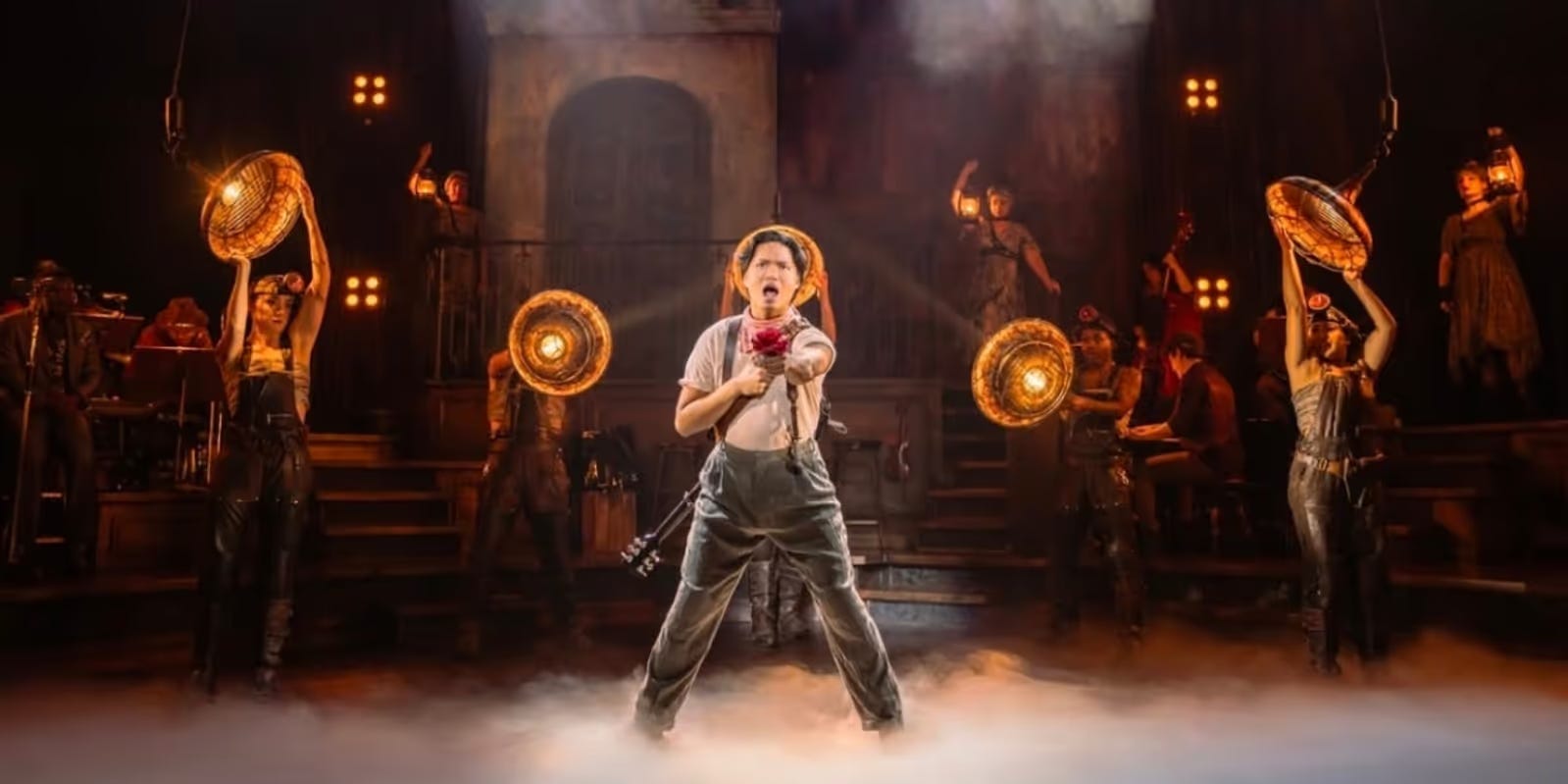
Somewhere in the hazy blur of April, which lived up to its general reputation in my life as one of the busiest and least enjoyable months of the year, I was lucky enough to be an old friend’s date to see HADESTOWN as it passed through once again on tour.
I don’t know if it was the VIP snacks in the lounge ahead of time, the excellent seats, or just not having to sit next to a local theatre critic who has zero ability to restrain himself during performances (not that that happened the last time I saw HADESTOWN… but it did), but I enjoyed the show much more this time around and even forgave changes I’d previously considered unpardonable, namely the re-written lyrics of Epic III or completely unnecessary intermission and thus somewhat over-padded first act.
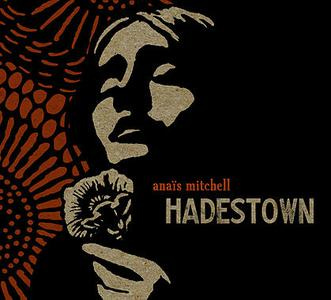
Though I still maintain that the single best version of the material is the live-recorded off-Broadway production (even if it does exclude “Flowers”, my favorite song), all in all I think HADESTOWN has earned its place as a Broadway hit and a masterpiece in the canon of Anais Mitchell, one of my favorite 21st century singer-songwriters (her album YOUNG MAN IN AMERICA is in my top 20 albums of all time). That two cornerstones of my personal aesthetic (American folk music and Greek mythology) were brought together into something that still somehow managed to capture the wider public imagination is validating in a way that I guess people who really love rap and American history must feel about HAMILTON. In the post-Sondheim musical theatre landscape, HADESTOWN is one of the shows that gives me hope for theatre in general, and Broadway musicals in specific.
I realize there are a significant number of folks who don’t like HADESTOWN and there is, of course, no accounting for taste. To simply not like something is a possibility of anything, nor is the show without its flaws (particularly the version that ultimately landed on Broadway), but like most really excellent works of art, sometimes what’s just as important to talk about as the work itself is the impact it seems to consistently have on its audience, especially those people who don’t like it and are very very vocal about that. Usually in a way that exceeds simply having an opinion and comes with a brand of smugness that makes it seem like they are proud that something which works for so many others, doesn’t work for them. You know, people who love being the exception to the rule. Which we all are to some extent and in some context or another. But for these people it needs to be the case most of, if not all of the time, and in my entirely anecdotal experience (I have done no official study) born contrarians really don’t like HADESTOWN.
Maybe because a core theme of the show is that nobody is the exception to the rule, except maybe Hermes and The Fates, but certainly none of the humans, and that includes the audience.
Ambitiously themed, HADESTOWN isn’t just about falling in love or losing someone we love, nor is it just about grieving and processing grief; broadly speaking, it’s about living in a world where the inevitable is not just inescapable, but also cyclical, meaning we not only repeat past mistakes but often do so consciously, perhaps even willfully, as a way to exert control over the way of all things.
As we watch Orpheus lose his love twice, a deep truth about human nature is laid bare: that we experience loss not only when it happens, but when we remember it happening, and thus sometimes even chose to keep losing something again and again rather than let it go entirely and hope it comes back to us on its own accord, in its own fashion. The test of Orpheus, who is granted the return of his lover on the condition he looks forward instead of back, can be read as an allegory for our struggle (and often, reluctance) to accept that life is a cycle of beginnings and endings, that even if something specific in our lives seems to defy that it too is only temporary, perhaps on a longer or non-linear time line, but never exempt from “this too shall pass”. HADESTOWN also reminds us that not only is everyone we love also someone we will lose, but that even if the loss destroys us it’s NOT going to destroy the world. The world will carry on just fine even if it’s not happy about it. The grind shall grind, the seasons will change, the wall shall be built one way or another.
This time through, I was really struck that HADESTOWN is as much about Hades himself as it is about Orpheus, and that the god of the Underworld is not just a foil for the hapless young lover, but his doppelganger, albeit older and more cynical. Just as Orpheus wants to save the world with a song that will make everything right again, Hades is also attempting to create a perfect world, trying to produce a perpetual summer in the realm of the dead, which is presented as hot and bright, if artificially so. He desires this out of a sincere belief that he can provide for humanity something it is missing, and specifically he wants it for Persephone, who he assumes will stay with him forever and always if the world up top no longer provides temptation through things he can’t offer in the world below. It’s something he wants so badly that’s he missed the part where six months in the shade might be something Persephone actually needs and, for all her protesting, even enjoys- not just about HADESTOWN, but Hades himself.
“But how can you NOT try to be Everything for the person you love?” is one of the questions HADESTOWN poses. That and, when you inevitably can’t be Everything… what’s left for you to be? Are you ANYthing? What can you do, what can any of us DO, that actually matters, if we can’t even keep a person who WANTS to stay?
GHOST TOWN SUITE, a six-song cycle by Bay Area writer/actress/musician Kristin Shaw-Hall, wrestles with many of the same questions while also being a showcase for its creator’s exceptional songwriting abilities. A folk/country fusion graced with Shaw-Hall’s crystal-clear vocals, GTS was first performed for audiences as part of the 2022 SF Fringe Festival, the last one to happen at the EXIT Theatre on Eddy Street and fourth from the last to happen before the festival’s quiet closure last year at 277 Taylor Street. Finally released online in April of this year, the thirty minute EP’s poignant wisdom is not only still fresh as when I first heard it live, but it arrived with alarming synchronicity to act as a comparative text for my return to HADESTOWN.

Written in the wake of her mother dying and the loss of her childhood home, Shaw-Hall starts off like she’s telling us a ghost story, asking the listener if they know about “the haunted house tucked away at the edge of town.” Her imagery is immediately gothic, full of death, madness and obsession all brought up within the first two minutes in an overture that will come full circle and turn out to be the finale as well. The protagonist of her own story, Shaw-Hall details her mourning process as she goes from being a girl who feels like the dead will never let her go, to being a girl who understands she’s the one who must do the releasing.
Of course, that’s easier said than done, especially when unlike many people, Shaw-Hall’s family mostly stayed put long after she moved out, creating a stronger sense of stability later into life than is typical in contemporary times. Going home to say goodbye to her empty house before it’s handed over to new owners, she is confronted by how little the town she grew up in has changed, how frozen in time or blithely unaffected by its passing everything is but the one part she hoped would never change. That part feels irrevocably gone now, even though unlike most of us, for a brief moment at least, Shaw-Hall actually can go home one more time. Riffing off the language of slasher films, she even presents herself as a sort of final girl, plagued by memories she used to treasure but now finds torturous, alienating her from everyone else who she perceives as able to move on better than she can. The irony of course is that she’s actually doing great, processing while most people just deny their feelings and doing it by writing truly catchy songs no less, but just as Orpheus trying to find his way back to the light can’t hear Eurydice behind him, Shaw-Hall at the top of GTS can’t gain a perspective on her grief; she can only be stalked by it.
Still, a final night in her empty house triggers as much joy as it does sorrow, and when morning eventually comes, she bids her ghosts goodbye realizing she can carry the memories with her even if she can no longer create new ones with the people she’s lost. In the crucial fifth track, “Messages”, she creates space to recognize the inevitability of what has happened while still holding space for her to have feelings about it. She lets herself mourn in a way that contrasts sharply with Orpheus in HADESTOWN, who when confronted with Eurydice’s abandonment, immediately sets off to “fix” what’s already unfixable. With eloquent imagery Shaw-Hall summons up the past but also captures the moment of stepping away from it, leaving us with a vision of a grown-up daughter driving away and not looking back, as much as she wants to. Claiming agency in her own grieving process, reducing the terrible moment of relinquishing her home to just one more moment in a life that must continue, she does what Orpheus can’t do and Hades won’t do.
But maybe they will, one day.
The core of coming to peace with our past is “To know how it ends/And still begin/To sing it again/As if it might turn out this time” as Hermes tells us at the conclusion of HADESTOWN (which is also the beginning of it). While it’s natural to assume he means maybe THIS time Orpheus and Eurydice will make it out of Hadestown it’s important to remember that in order to do that, Orpheus would have to not look back, meaning Hermes might mean that “turning out this time” is really Orpheus conquering his doubt, with or without Eurydice’s resurrection as reward. After all, what undoes Orpheus is no trick of Hades, who is honest when he tells Persephone that he didn’t let the lovers go but rather he “let them try”; it is Orpheus’ own lack of belief in Eurydice accompanying him beyond her death that tempts him into forsaking the opportunity he’s been granted. Shaw-Hall suffers no such crisis of faith, singing “Guess I’ll have to be all right/with your ghost at my side.” She KNOWS the ghost is there.
Looking back is natural. It’s something we all do. But it’s hard. And it always comes with the risk of losing again something we’ve already lost, an experience which can be devastating whether it’s undergone literally or allegorically. But I would put out there that what makes it SO devastating is not so much the reminder of who or what we lost but confronting the fact that we will lose again one way or another because nobody, including us, is the exception to the rule. No matter how exceptional we ourselves or the ones we love may be. No matter how exceptional our love is. The question is never “can we bring Eurydice back to life?” because deep down we know we can’t; the question is can we live with that? Can we live with a ghost trailing us and still look forward? GHOST TOWN SUITE says we can.
And if we can’t, then as HADESTOWN reminds us, we can always sing it again… and again.
***********************************************************************************************************
Hello!
Thank you for reading!
So, in a moment of just, fuck it, I’ll give it a try, I am finally doing that thing people keep saying I should do and giving you the chance to support my writing.
If you would like to help keep this middle-aged single writer turned food equity coordinator/usher/online content creator/social media manager/theatre maker, I accept Zelle (it’s my phone number), PayPal (@stuartbousel), or CashAp ($Bousel) and I leave it up to you to decide what to give.
You can also get a paid subscription to my Substack. I offer multiple options- two year, one year, and month to month subscriptions. All of them help with my rent.
Obviously, I’m not going to put anything behind a paywall and I’m honored you read anything I write at all. I’m going to try to write something here every Sunday/Monday, around this time, and if you have thoughts or feelings you’d like to share with me to write about I’d love that.
And in case this isn’t clear: this site is not intended to be a news source. And though it may veer into memoire I admit that if it makes for a better story, I may play a little fast and loose with “the facts” so take everything with a grain of salt. Reviews and culture discussions included, any views I present here which are not cited otherwise, are my own, and I do not speak on behalf of any organization or person but myself.
Be well. Reach out. You are a light.
Stuart